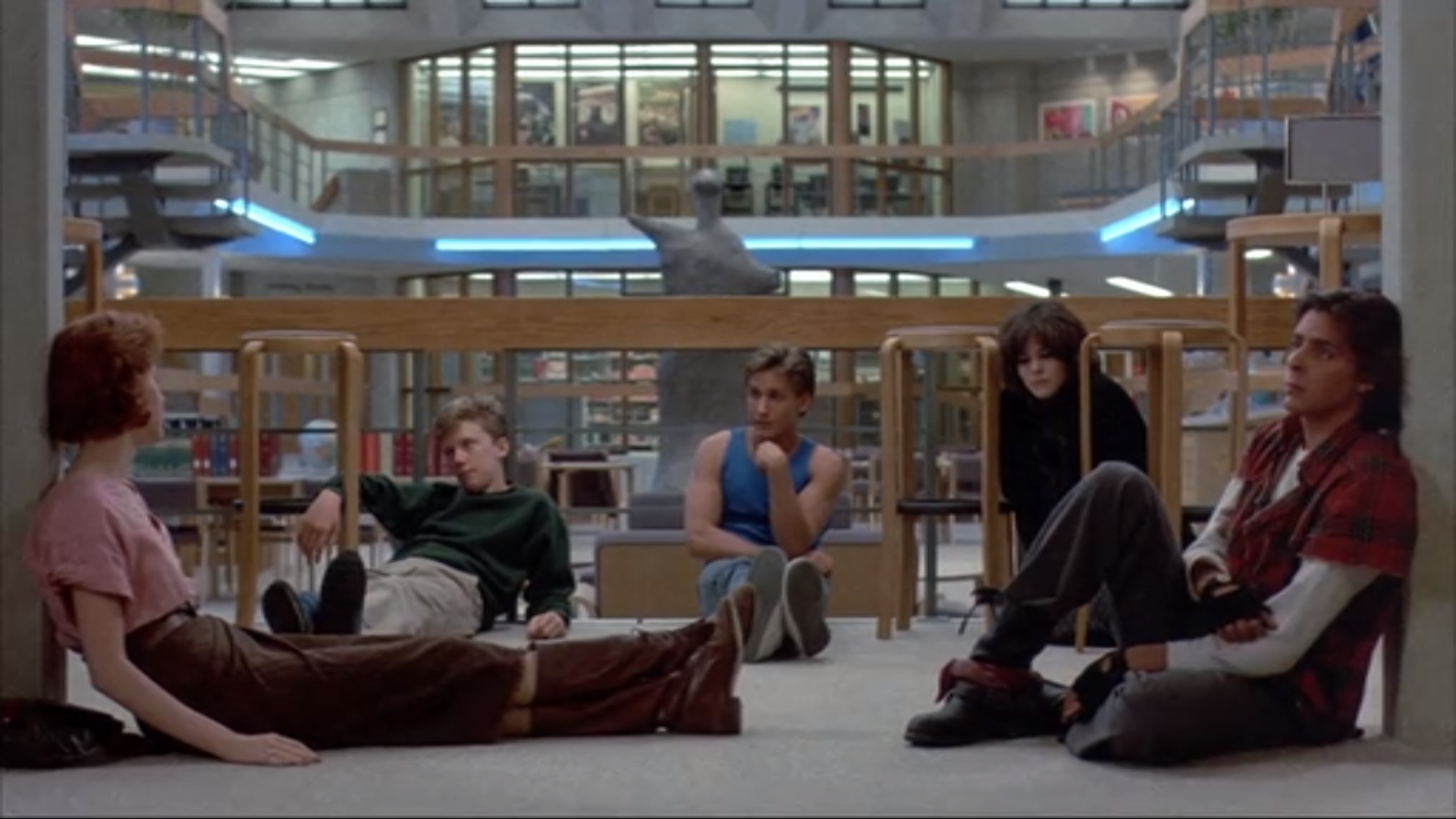
John Hughes, 1985 film ‘The Breakfast Club’ examines the life of these teenagers who all feel disconnected from society in one way or another. They don’t like the person that their parents have brought them up to be and this has been having a damaging impact on their life. Through this detention the students form a connection with each other by exposing and relating to each others own insecurities and frustrations. This connection that they form gives them a deeper understanding of themselves as an individual, leaving their life open to be who they want rather than how everyone else see’s them to be.
Coming of age films have always held a strong place in my heart, as I often resonate most with films that contain the most relatable qualities to them, which at my current stage in life are most present under this genre. Character studies are also a type of film I have a great appreciation for in the same respect, as I always find it so fascinating to explore people with characteristics that we may not entirely understand. I’ve always found characters studies to be a great way to build understanding and perspective on the people in this world. In this respect, The Breakfast Club is an example of one of the most effective and relatable character studies that explores the challengers that many teenagers face, that are still relevant up to this day.
The audience is first introduced to the stereotypical representation of these characters, though the perspective of the school principle (Mr Vernon), reading their essay reflecting on who they think they are after a day spent in detention for their wrongdoings, being met with the response ‘we accept the fact that we had to sacrifice a whole day in detention for whatever it was we did wrong. But we think you’re crazy to make us write an essay telling you who you think we are.’ The audience is introduced to these characters as the stereotypical constructs that Vernon has viewed them as. Brian as the ‘brain’, Andrew as the ‘athlete’, Allison as the ‘basket case’, Claire as the ‘princess’, and Bender as the ‘criminal’. As the film goes on, these stereotypes are slowly deconstructed to present much more complicated individuals that almost every teenager could fit themselves into at least one of.
I can say for myself, I strongly connected to Alison in many respects. Despite all the characters feeling disconnected in some way or another, Alison has the most trouble hiding it. In some cases it appears she even wants people to know and view her as the outsider. I always related to the small ways in which she interacted always setting far away from the rest of the group, not completely participating to an extent that puts all the attention on her, yet not entirely disconnected from it either. There are times where she decides not to participate in the group but does still follow their journey such as when they are smoking weed, while there are other occasions where she will join in and participate in what they are doing. She is a character that is incredibly difficult to untangle and understand the reasoning behind her actions, but if you’ve ever experienced anxiety or have that very introverted personality, you might be able to link her interactions to your own personal experiences. Her introverted personality often results in her keeping her thoughts to herself, only communicating when she feels the need to. She doesn’t actually speak until 24 minutes and 48 seconds in, when she randomly yells ‘HA!’ as a way to confirm the suspicion of one of her held in beliefs when Clare reveals that her parents ‘just use me to, get back at each other’, which it is suspected that Alison relates to in a strong way through her own experiences.

Most of what she does say is either in a form of self defense, self justification, or an insult all of which is to hide her insecurities that she doesn’t know how to deal with. With her character, there is that sense that she really does want to let people in her life but doesn’t know how. It appears that the ways she occupies herself is a form of distraction to prevent her from confronting those feelings of loneliness, but there are situations where she can’t do that, and in consequence the way in which she acts can be very self destructive, making it even more difficult to build the friendships she wants, as is most noticeable when she steals Brian’s wallet as a way to introduce him and Andrew to her hoarding habit. It’s hard to distinguish exactly what outcome she was trying to achieve through doing this, but it’s clear she’s acting on a desire to build some kind of friendship or support network with these people but doesn’t have the communication skills to know how to go about it. She’s a difficult character to understand, due to her insecurities preventing her from letting anything vulnerable about herself out. In consequence she is inevitably going to feel disconnected from society as no-one is capable of understanding her. I actually really dislike John Hughes way resolving this issue she has with herself though allowing Claire to give her a makeover, as this is realistically likely to make her even more disconnected through being made out to be someone that she is not. Hughes for some reason feels the need to conclude with Allison feeling connected and confident about herself by the end when that isn’t remotely realistic within such a small time period or even necessary within the narrative being told. Alison would have already felt slightly more confident within herself by the end of the day through her experience bonding with this group of people. To up that feeling of connection to an extreme degree was not only unrealistic but completely unnecessary. If you are able to put that narrative decision aside, Alison is an incredibly interesting and in my case, a relatable character that really captures what it feels like to be disconnected from society, not knowing how to escape from that cycle of detachment.
The character Brian is at first represented with this nerdy, detached personality, being wildly over-obsessed with his grades to a level that is unhealthy. He also at first feels disconnected from this group of people, being lost in the pressure fulfilling the expectations by his own parents, despite it forming him into a person that he doesn’t want to be. As he discovers more about these people, he realizes that he’s not the only person having his parents forming him into a person he doesn’t like. The high expectations his parents have set are however starting to have a damaging toll on his mental health, letting his entire life purpose revolve around getting good grades. It’s a situation he is aware is unhealthy and self-destructive but doesn’t know how to approach it with his parents, who it sounds like live a very conservative lifestyle.
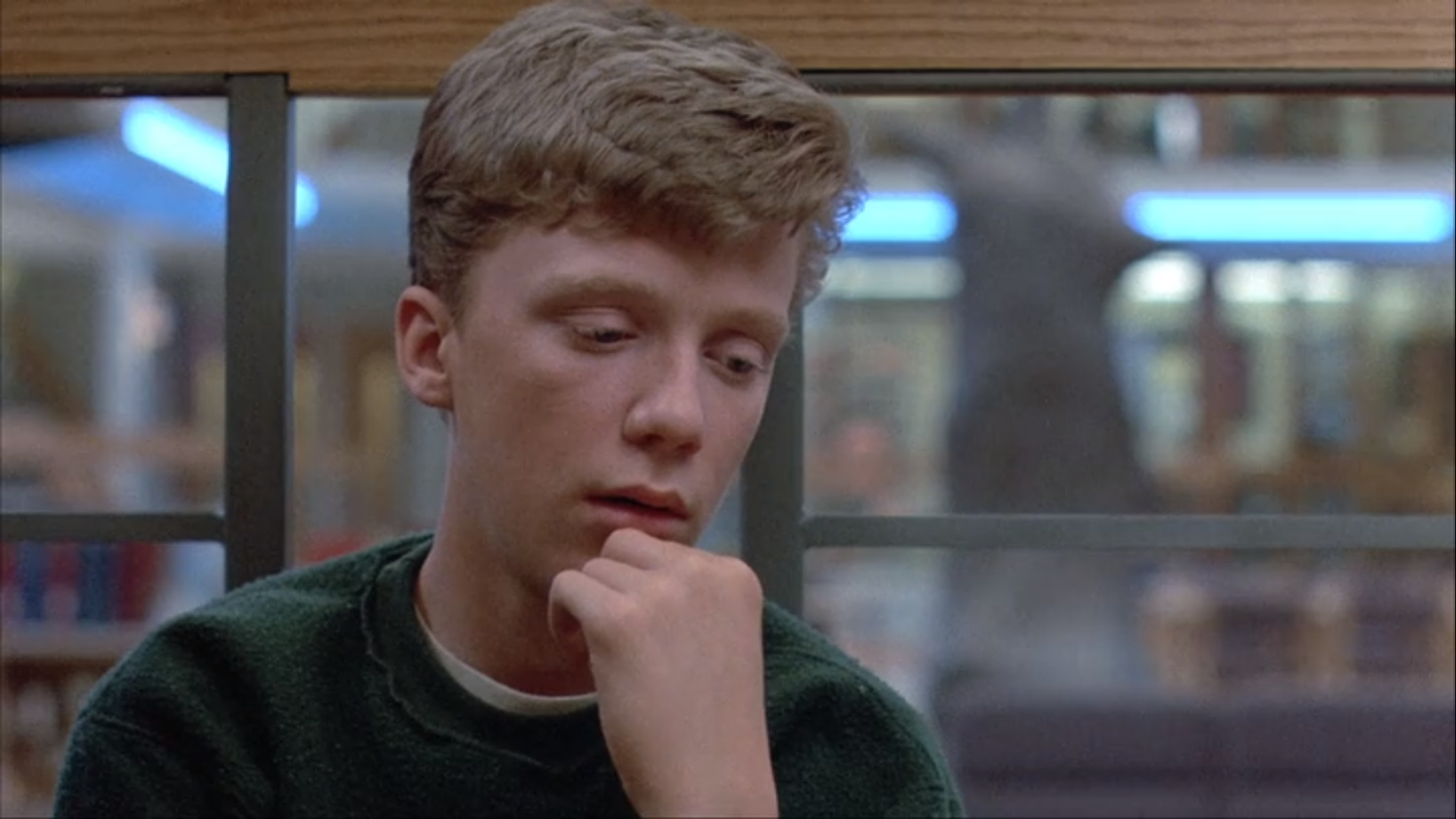
This conservative way of living is something that Brian appears to want to detach himself from. His willingness to smoke weed with the group more than everyone else, alludes to him wanting to get out of that of lifestyle, as it’s something his parents would likely have been strongly against. He uses whatever opportunities he can to better discover himself as a person, in consequence of his parents not giving him any opportunities. It feels like he’s the one most emotionally effected by this experience, trying his best to make the friendship formed within the group permanent. He is left with this as an unlikely possibility as everyone else is reluctant to embrace this friendship in a public setting due to their own personal insecurities associated with how everyone else will view them. Brian’s insecurities are more associated with accepting who is as a person at this current point in time. There is one point where he lies about about his sex life due to not being able to openly acknowledge an aspect of his social life that he’s ashamed of. Forming this friendship permanently would have likely gave him the opportunity to more easily overcome many of those insecurities through providing him with the social life he has been lacking, while for the others it would force them to more openly confront their insecurities.
Being trapped in the expectations set by his father, Andrew faces many of the similar challenges to Brian in terms of confronting his parental expectations. These are more exclusively set by his father who appears to live with a patriarchal view in terms of what he expects his son to be. He often alludes towards how his father doesn’t care about him in the slightest as a person, but more of what he’s physically capable of, referring to his father as a ‘mindless machine’.

Despite this, he still feels the pressure to live up to his fathers expectations, doing some really horribly and insensitive things just to prove his masculinity to his father. From the outside he’s a bully, but by seeing it from his point of view, the audience is positioned to perceive him differently through understanding what caused him to behave the way he did. Despite the pressures he has fallen under, there is a side of him that observant and considerate of others. He often goes out of his way to help people in a distressed state, even when it puts himself in a vulnerable position. This is a side of himself that he appears to like, but the pressures set upon by his father prevent him from embracing it. His own insecurities associated with his perceived inability to think for himself prevent him from developing the confidence to be the person he wants to be. The reality is at many points he does actually show the capacity to think for himself, such as when he goes out of his way to help others when no one else had the consideration to. There’s never a point where he comes to realize this himself, but his capacity to do so is made apparent.
Being trapped in an abusive family, Bender is poorly influenced by his parents to a much greater extent compared to Andrew. His abusive upbringing has lead to him developing similar characteristics. In many cases he verbally bullies and harasses everyone to some extent to make himself appear in control of situations. He will even go to criminal extents to maintain control, most notably when he brings a knife to school. At one point he goes as far as sexually harassing Claire. Yet though hearing side of the story, the audience is positioned to see and understand what caused him to become the kind of person he is. He’s not a likable character, but there is something about his play on words to stay on top of situations that is admirable. Some of the funniest lines in the film come from the dialog he uses to stay on top of situations. But when he can’t use dialog or his physical presence to maintain dominance, his state of vulnerability becomes very clear, which other people just use to take advantage of him. Vernon uses whatever opportunities her can to abuse and in some cases just blatantly bully him behind the other students back, making it clear that he can’t do anything to prove he had done so, with Bender’s word of mouth being basically useless compared to Vernon’s. Once the audience is introduced to the perspective of his life, it’s hard not to feel at least some extent of sympathy towards Bender. It’s really hard to talk about his character, since he does some really horrible things, yet is presented in a way that is designed to make you feel sympathy and in some cases appreciate him. It’s presents the perspective of the type of person we are normally conditioned to hate and despise in a light that actually shows their side of the story. Through this, we see him as a normal person facing their own set of insecurities and personal troubles that make it harder for them to function in the outside world.

He is still presented as trying to do good in his own way, most notably when he gives himself away to Mr Vernon so that the rest of the group can make their way back to the designated room they left without being noticed. It’s clear that he does try to do good but his insecurities always get in the way. He is in some cases the most insecure with the people he likes most, as seen with Claire who he consistently insults which appears to be some sort of defense mechanism he uses to not give away that he likes her. He’s a difficult and fascinating character to completely understand, which is why I think John Hughes is such a great directer. He knows how to create these complicated and layered characters in an incredibly realistic manner to an extent that very few directors actually take the time to explore.
Having been brought up in a wealthy and privileged position, where she is one of the most well known and respected members of the school, Claire still feels a strong sense of disconnection and detachment that comes with her life. As with increased popularity, comes a greater extent of pressure to please everyone in her group of friends. There’s that sense that everyone appears to use her because of what she represents rather than who she is as a person, stating that even her parents ‘just use me to get back at each other’. It’s clear that she’s sick of being objectified and treated differently to everyone else because of her position in the school. This is most clearly seen through her annoyance of being treated as a sex figure, not liking the need to openly express her sex life or lack thereof. Through this character we see someone who’s happiness has been declined through their position of wealth changing the way they are treated and perceived in society. This is actually a fairly common issue that is rarely explored in films. Most people expect wealth to bring a sense of happiness when that isn’t the reality at all. For many people it actually has the complete opposite effect in the long term.
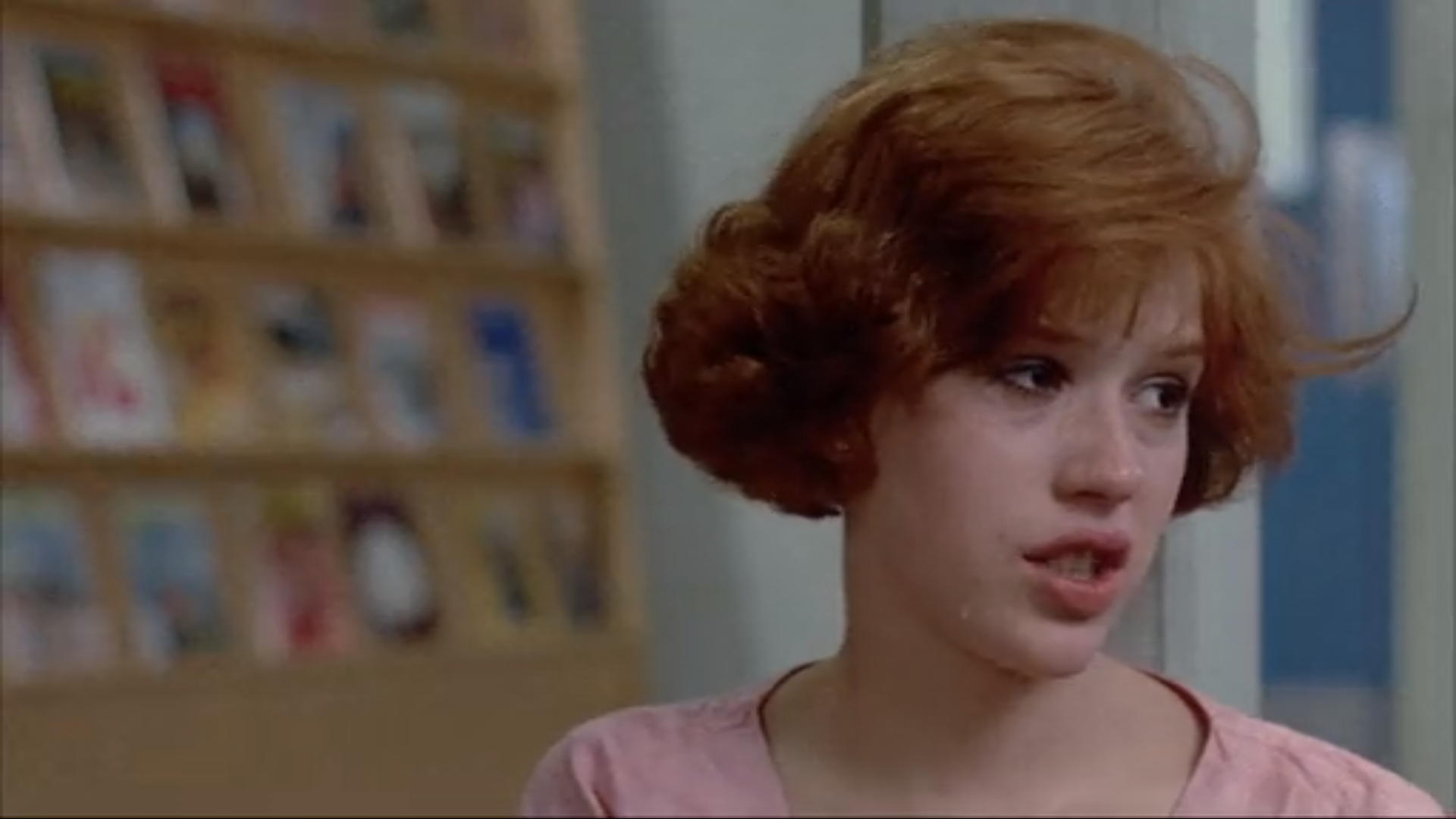
I do however have a big problem with how John Hughes concludes with Claire kissing Bender, as this is an incredibly unlikely way for her to react just after being sexually harassed by him a few hours prior. It shows a clear blind spot within the director that although i’m sure wasn’t intentional, does have a damaging influence on the films overall effectiveness in rounding off the narrative.
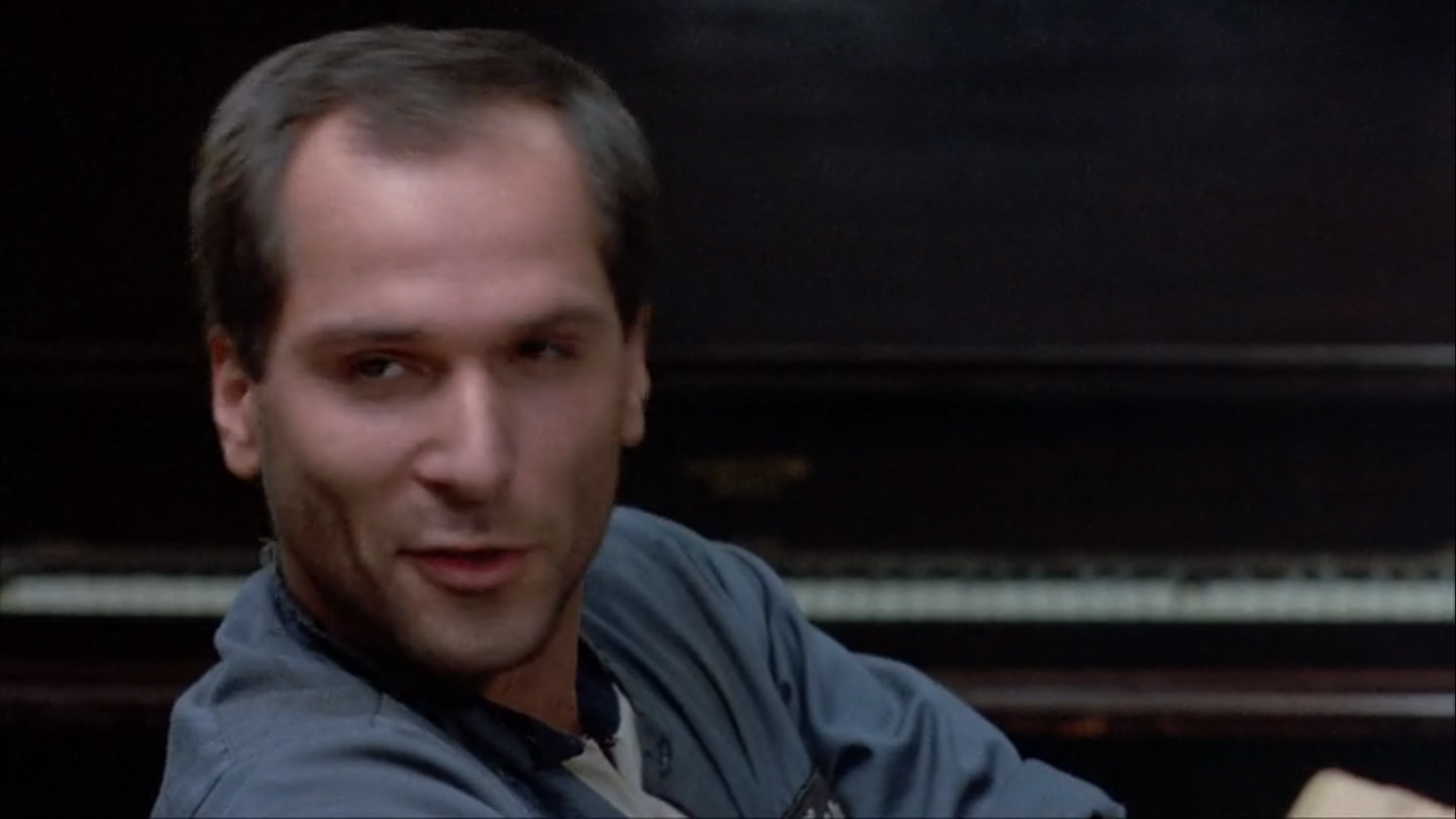
The one perspective that very few actually take the time to analyse, and I would actually consider to be the most important is of Vern who has a despise for this new generation of children without any real consideration or understanding around what they’re going through. These are kinds of people that I personally try to avoid at all costs, being blinded from their own perspective that they were brought up with. This is exactly the case for Vern, who his perceived experience has blinded him from perspective stating ‘I’ve been teaching for twenty two years, and each year… these kids get more and more arrogant’. With that perceived experience he has formed over his 22 years of teaching, he feels he has the right to look through students confidential files and ridicule someone reported having ‘a slight history of mental illness’, blurting out ‘no wonder he’s so fucked up’. It doesn’t take a genius to notice the who’s got more arrogant over time.

On the other hand, the school janitor, Carl is represented as having a much larger perspective through observing his surroundings, being ‘the eyes and ears of this institution’. As a result he understands the students to a much greater extent, at least to a degree where they have some kind of respect for him. There’s the chance that he still remembers his own personal experiences associated with the challenges that teenagers face, and therefore realizes that it’s still essentially the same, it’s just the cultural shift had overtime changed the way this new generation of students face and deal with those challenges.
By the end, all the characters, despite their vast differences, have something they can relate to in one way or another. They all have own set of insecurities and disconnections that they are able to share through expressing their own experiences with each other and connecting it to each others own individual life experiences. Although the group does provide the kind of friendship they need at this point in their life, there is that sense that this will not be permanent, as the established class system prevents them from doing so without suspected consequences on how they will be perceived. The friendship they formed is so improbable to them that the film contains this kind of dreamlike fantasy quality to it. It’s hard not to notice many of the unrealistic aspects of the film. At first I associated these as flaws, but after multiple viewings, I couldn’t help but wonder if many of those unrealistic aspects were done on purpose to make it feel like a dream. It’s something you’ll have to decide based on your own interpretation of the story. For me, the film works best when its associated as a dream. Most aspects of a dream don’t make complete sense, they often don’t have a resolved conclusion, they often fulfill a fantasy within a person’s mind, they often explore intense emotions. In this respect, The Breakfast Club works perfectly as a dream.
What makes this film stand out most of all is how accurately it depicts how teenagers feel. To this day it still remains one of the most relatable and accurate depictions out there that nothing else has come remotely close to. This combined with one of the most memorable scripts I’ve ever come across, incredibly detailed character construction, and precise pacing, forms one of my personal favorite films of all time. There is no doubt that some aspects have aged but the accuracy in how they explore what it feels like to be a teenager still contains its powerful presence to this day. John Hughes knew how to work with young actors and how to get them to convey how they feel on screen. A lot of the most memorable lines from this film were said to have not actually been in the original script but rather improvised in takes done after he had already shot the scenes in his intended way. Through giving the actors the opportunity to express their own lines of dialog, it gave the film this accuracy that not even he could have been able to pinpoint in the post-production stages.
As someone who has only just graduated from high school, I can say that the impact this film had on me was incredibly powerful. I would consider it to be the film I relate most powerfully to at my current stage in life. That will likely change as I get older, which is why I wanted to cover it now while its impact is at its strongest. It’s only been around three years since I first discovered it and I honestly wish I saw it a lot earlier. It’s one of those experiences that I would recommend everyone exposes themselves to at some point in their life. It’s not a challenging or difficult watch, just a really well constructed character study with a nice comedic undertone exploring the challenges teenagers face in accurate manner.


